Sitting Position
Topics on This Page
- Introduction to Sitting Position
- Position of the Legs
- Position of the Upper Body
- Practicing with a Mirror
- Summary
- Final Words
Introduction to Sitting Position
Proper sitting position is an important part of tabla training. If you are a complete beginner then this is the place to start.
When we talk about sitting position, we’re really talking about two general areas of the body:
- position of the legs
- position of your upper body
Position of the Legs
The most common leg position is cross-legged. This is usually the most comfortable and natural position to begin with, and is the recommended position. The legs may be in either of the two positions shown below, though the first is likely to be more comfortable. You may also switch between the two while playing.
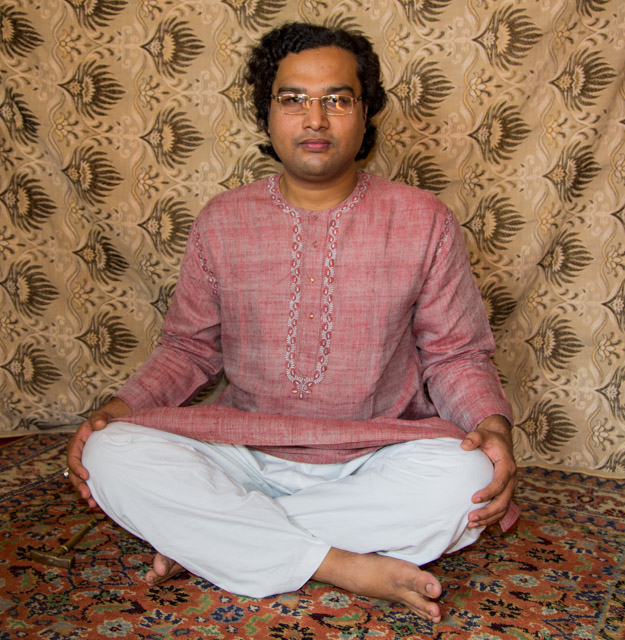
Cross-Legged Position 1
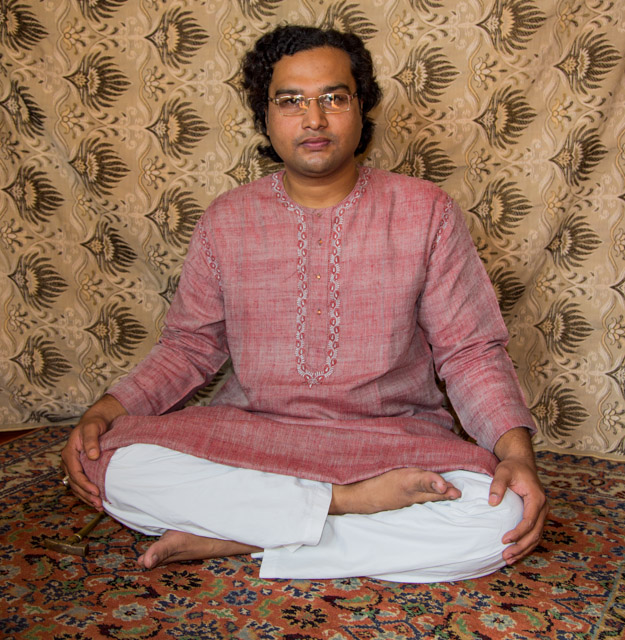
Cross-Legged Position 2
Alternative Leg Position
An alternative position is to have your right leg (or your left leg if you play left-handed) folded in an outward position as shown below.
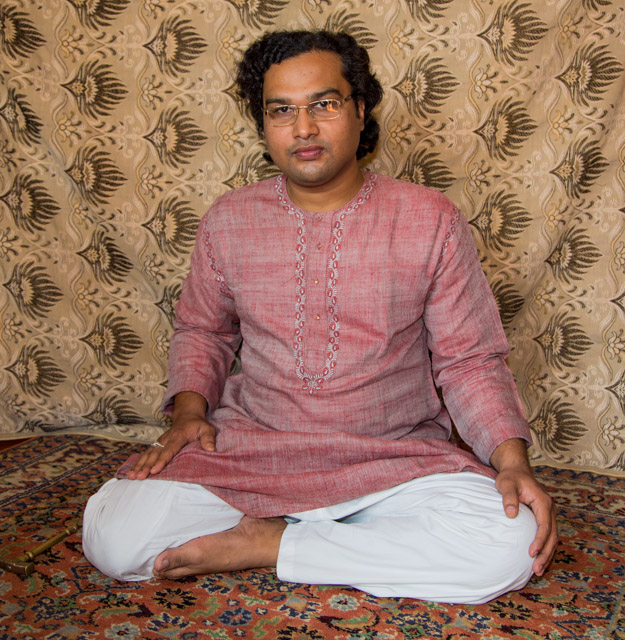
Alternate Position-front
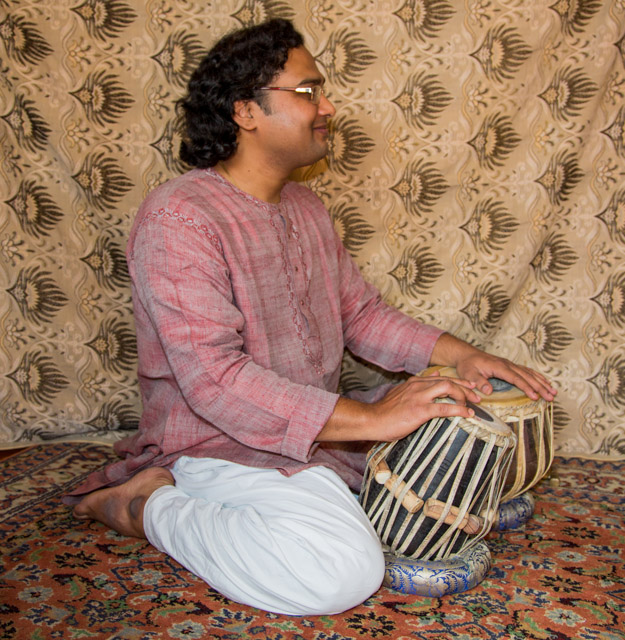
Alternate Position-side
This position gives slightly more stability to your daya hand because it naturally straightens your back and brings your hip slightly forward, adding more support to that side of your upper body.
However, for beginners, it is recommended that you start with the cross-legged position to keep balance in both sides of your upper body. With time, the alternate position may be used if you begin to feel discomfort in the knees or feet.
Some players, including myself, sometimes switch between the two while playing. This allows sitting for longer periods of time without having to stop and stretch your legs. This alternate position was the main sitting position of Chhotelal Misra.
Pain While Sitting
It may be difficult to sit in either of these positions for long periods of time, especially for adults who are used to sitting in chairs and couches.
If you find it difficult to sit for an hour at a time, I recommend you start stretching your legs and knees on a regular basis. This is a good idea even if you don’t feel discomfort, since many tabla players experience leg and knee problems as they age, and regular stretching from an early age may help to lessen this.
Position of the Upper Body
The position of your shoulders, elbows and wrists is extremely important. Bad positioning in these areas will directly affect your playing technique and development, and can be difficult to change in the future. It’s best to start out right until you keep good posture automatically.
Keep this in mind:
The power of a tabla player’s strokes should come mostly from the fingers and the wrists, not from the shoulders or forearms.
By following the guidelines for shoulder, elbow, and wrist positioning, you force your fingers and wrists to work more. This is essential to developing clear, powerful technique.
While upper body positioning is best learned while playing and will be regularly reinforced in the lesson material, below are some general guidelines for reference.
Shoulders
The shoulders should be even and relaxed in their natural positions as shown below. This can be difficult to keep because there is a natural desire to raise the shoulder when you are trying to play hard or fast. It’s very important that you pay attention to this and keep your shoulders down and relaxed, especially for your daya side. This will force you to get power from the fingers and wrists, instead of the arm and shoulder.
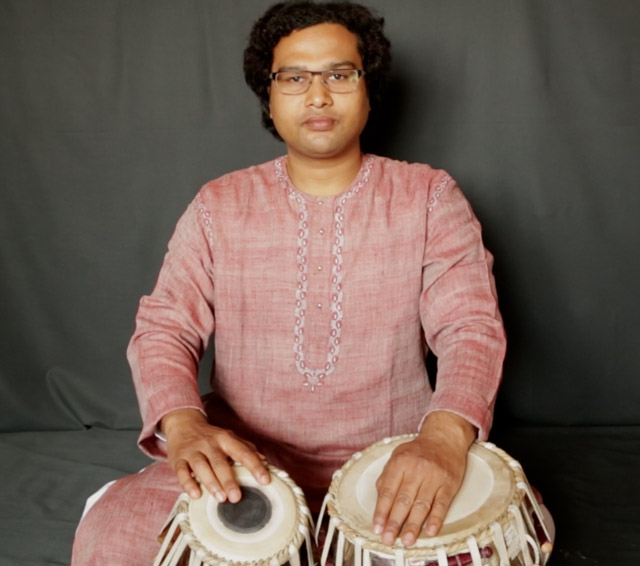
Shoulder and Elbow Position
Elbows
Your elbows should be kept close to the body in their natural position as in the photo above. Here too it is natural to lift the elbows up and away from the body to give more power. Try not to do this and keep them relaxed at your side.
(Note: In some traditions, players will strike the daya slightly more from the side than in the tradition taught here. In this case, the elbow will be extended away from the body somewhat.)
Practicing with a Mirror
One of the best ways to maintain good positioning in your upper body is to practice in front of a mirror. The mirror should be directly in front of you and you should be able to see your shoulders and elbows clearly.
Start by just putting your hands in a playing position on the tabla, but not actually moving. Make sure there is no tension in your shoulders, and that your elbows are relaxed at your side. Take a good look at this position and try to keep it as best you can while playing.
Summary
Remember that your technique should be coming from your fingers and wrist. By not “cheating” with your shoulders, elbows and forearms, your are forcing your fingers and wrists to do the work. This is the best way to build your technique and get the best sound.
Some movement of the shoulders and elbows is natural and unavoidable. But the more you limit this movement during your practice, the better off you will be.
Final Words
I should mention that with many performers you will see plenty of movement in the shoulders and elbows, or some differences in elbow and wrist positioning. In performance, some movement is common for difficult techniques at high speed, or it may simply be a different approach to technique.
What’s presented here is an approach to practice based on an economy of movement which focuses on the development of finger and wrist strength. Obviously there are other approaches which work, but I can only present the approach that I learned. Nevertheless, in my experience, most players from all gharanas essentially follow the basic guidelines presented here for upper body positioning.
Finally, some of the upper body movement that you see in performance may simply be showmanship. If you ever get to a professional level, you are entitled to some showmanship. But this is no way to practice. If you have bad positioning, your technique will suffer. And there’s no point in looking cool if you don’t have good technique.
Next Topic: Tabla Position